
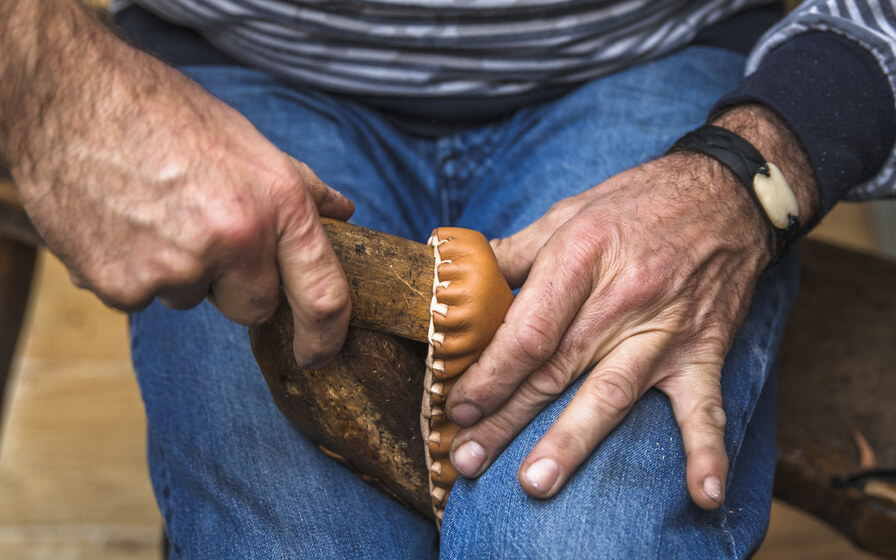
A single pouch takes the better part of a day, start to finish. We could go faster. We've chosen not to - some things are only worth doing at the pace they ask for.
People are often surprised when they visit the atelier and see how little happens in an hour. A pattern is traced, checked, traced again. A hide is turned over in the light until we find the part of it that wants to become a strap, and the part that wants to become a lining. Most of the work, at this stage, is looking.
The first cut is the slowest.
Leather doesn't forgive a hurried knife. Once a piece is cut, it's cut - there's no undo, and a millimetre out at the start becomes a seam that never quite lies flat at the end. So we mark twice, cut once, and then let the pieces rest overnight so the edges settle before they're skived.
"Every shortcut shows up later. Usually in the seam, sometimes in the strap, always eventually."
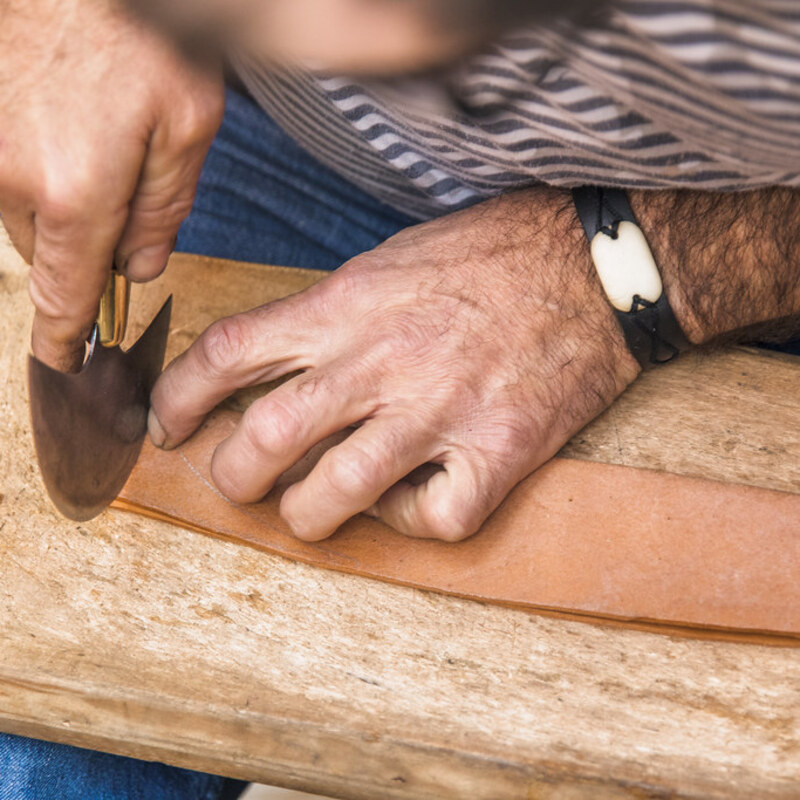
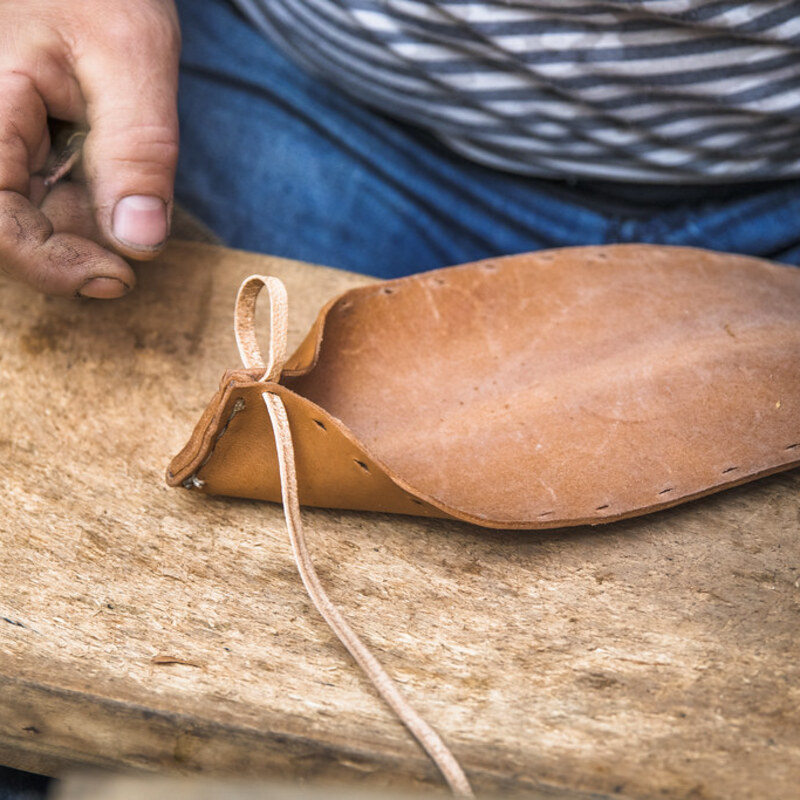
Stitching by hand, on purpose.
We do own a machine - an old one, and we love it for long, straight runs. But the seams that take the most strain are sewn by hand with two needles and a single waxed thread. If one stitch ever breaks, the rest hold. It's slower by hours, and it's the reason a bag made here can be handed down rather than replaced.
Then comes the edge: sanded, dyed, burnished, and burnished again until it shines like the inside of a shell. It's the step nobody notices when it's done well, which is exactly why we don't skip it.
What slow gives back.
Working this way means we make fewer pieces - forty, not four hundred. It means a waiting list some seasons, and the occasional custom order we have to say "not yet" to. But it also means every piece leaves the bench having been looked at, properly, by someone who cares how it will feel in your hand ten years from now.
- From the bench at Atelier Oliveira